
Intrauterine Insemination (IUI)
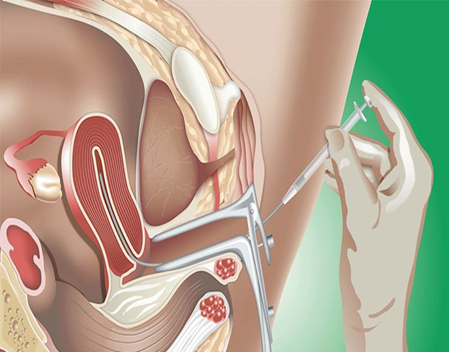
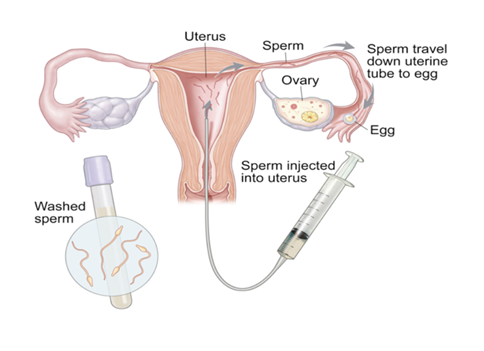
IUI (Intrauterine Insemination) is a simple fertility treatment where specially prepared sperm is placed directly into the uterus around the time of ovulation. This increases the chances of fertilization by helping sperm reach the egg more easily.
When Is IUI Recommended?
IUI may be suggested for:
- Unexplained infertility
- Mild male factor infertility (low sperm count or motility)
- Minimal to Mild endometriosis
- Anovulatory infertility
- Cervical factor
- Donor sperm insemination-Azoospermia/ Inheritable genetic disorder in male partner
- Same-sex couples or Single women trying to conceive
- Physical or Psychosexual dysfunction : Erectile dysfunction /Vaginismus
How Does IUI Work?
- Ovulation Tracking: Natural cycle or with fertility medications (tablet/ injection)
- Sperm Preparation: Semen is washed and concentrated
- Insemination: The sperm is inserted into the uterus using a thin catheter
- Follow-up: Pregnancy test after 2 weeks
Success Rates
IUI success varies with age, cause of infertility, and use of fertility medications. On average, success rates range from 5–20% per cycle.
Is It Painful?
IUI is usually painless or causes only mild discomfort, similar to a Pap smear.
No anaesthesia is needed.
Talk to Us
Our fertility specialists will guide you on whether IUI is the right option for you and create a personalized plan for your fertility journey.
In Vitro Fertilization (IVF)
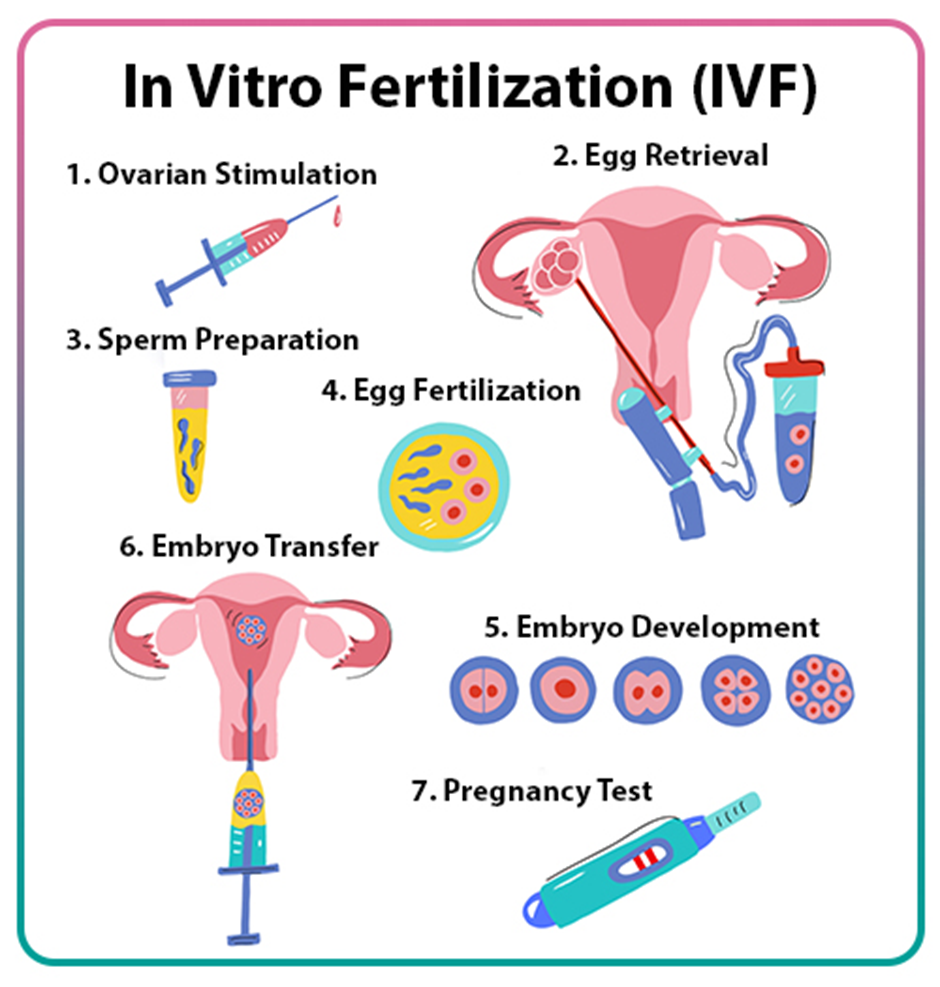
IVF (In Vitro Fertilization) is an advanced fertility treatment where eggs are collected from the ovaries and fertilized with sperm in a lab. The resulting embryo is then transferred into the uterus to help achieve pregnancy.
When Is IVF Recommended?
IVF is commonly used for:
- Blocked or damaged fallopian tubes
- Azoospermia /Severe oli
- Endometriosis -Grade 3 & 4
- Unexplained infertility- after failed IUI
- Failed IUI or other fertility treatments
- Advanced maternal age
- Fertility preservation (egg/embryo freezing)
- Use of donor eggs, sperm, or embryos
IVF Process – Step by Step
- Ovarian Stimulation: Fertility medications help the ovaries produce multiple eggs
- Egg Retrieval: Eggs are collected under ultrasound guidance
- Fertilization: Eggs are fertilized with sperm in the lab
- Embryo Development: Fertilized eggs grow for 3–5 days
- Embryo Transfer: A healthy embryo is placed into the uterus
- Pregnancy Test: Blood test after 10–14 days
Success Rates
IVF success depends on age, egg quality, and other factors. Average success rates:
IVF Success Rates by Age : (Own Eggs, Per Cycle)
- Under 35 years: ~40–50% chance of live birth per IVF cycle
- 35–37 years: ~30–40%
- 38–40 years: ~20–35%
- 41–42 years: ~10–20%
- Over 42 years: ~3–10%
Planning Multiple Cycles?
Cumulative chances improve—the likelihood of success can reach 50–70% after several IVF cycles.
Is IVF Safe?
IVF is a safe and widely used procedure. Like any medical treatment, it may have side effects, but most are mild and manageable.
Talk to Our Experts
We provide personalized IVF plans using the latest techniques and compassionate care. Let’s take the next step in your fertility journey — together.
ICSI (Intracytoplasmic Sperm Injection)
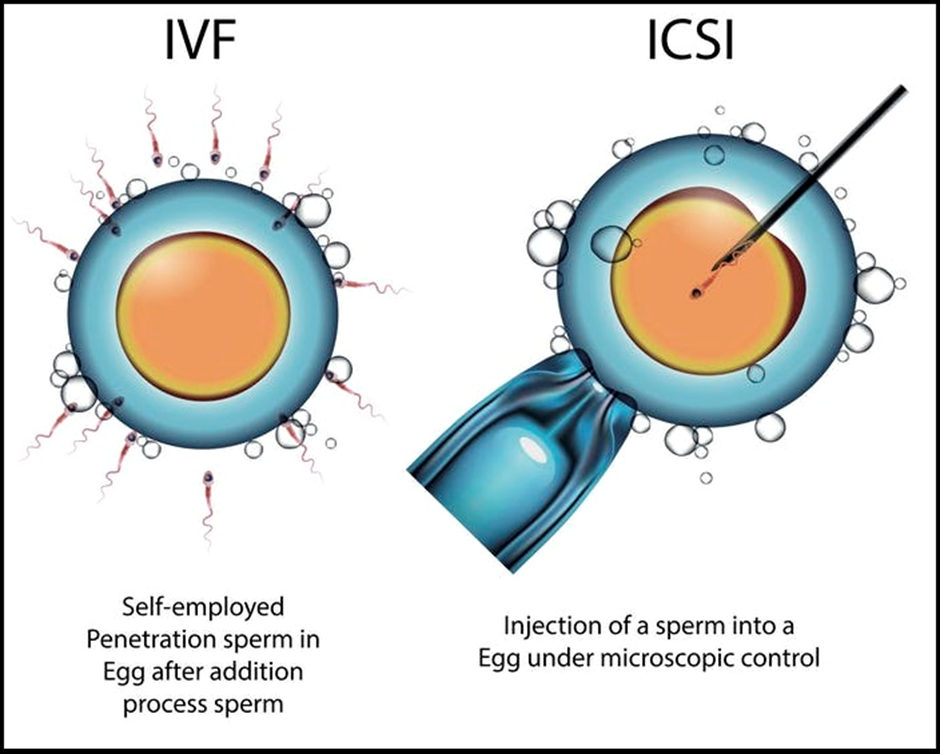
ICSI is an advanced form of IVF (In Vitro Fertilization) where a single healthy sperm is injected directly into an egg in the lab. This technique helps overcome male infertility and improves fertilization chances.
ICSI is commonly used for:
- Low sperm count or poor sperm motility or morphology
- Azoospermia : Obstructive / Non obstructive :requiring Surgical Sperm Retrival
- Previous IVF with poor fertilization
- Use of frozen, surgically retrieved, or donor sperm
- Fertility preservation (e.g. cancer patients)
How Does ICSI Work?
- Egg Collection – Eggs are retrieved from the ovaries after hormonal stimulation.
- Sperm Selection – A single best-quality sperm is chosen.
- Sperm Injection – The sperm is injected directly into the egg using a fine needle.
- Embryo Transfer – Once fertilized, the embryo is grown in the lab and then transferred into the uterus.
- Pregnancy Test – A blood test is done 10–14 days later.
Success Rates
ICSI fertilization success rates are 70–80%, and pregnancy success rates are similar to IVF — depending on factors like age, egg quality, and embryo health.
Is ICSI Safe?
Yes, ICSI is a safe and well-established technique used worldwide. It’s especially helpful when male infertility is a major factor.
Our fertility team can guide you through whether ICSI is the right option for you.