Uterine fibroids are non-cancerous (benign) growths that develop in or on the walls of the uterus. They’re very common, especially in women of reproductive age, and can vary in size—from tiny seeds to large masses. At Bombay IVF & Gynac Clinic, we specialize in the diagnosis and fibroid treatment, offering personalized care to help manage the symptoms of fibroids and their impact on fertility.
What Are Fibroid Types?
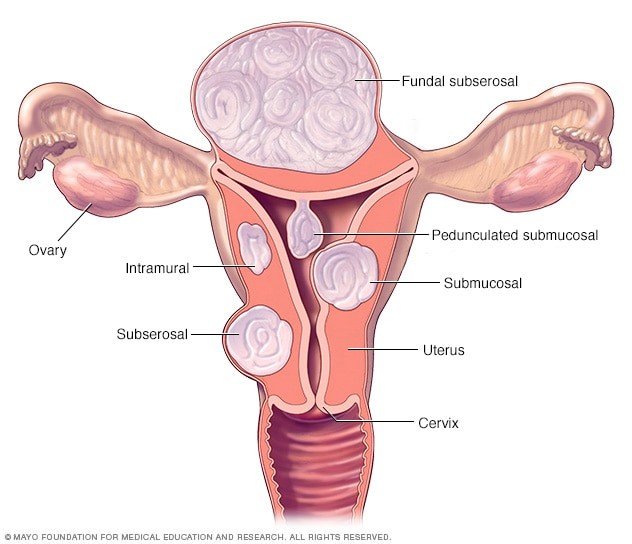
Fibroids are classified based on their location in or on the uterus. The main types include:
1. Submucosal Fibroids
- Grow just beneath the lining of the uterus (endometrium) and bulge into the uterine cavity.
- Most likely to affect fertility because they can interfere with embryo implantation and increase miscarriage risk.
- Often cause heavy menstrual bleeding and bleeding between periods.
2. Intramural Fibroids
- Develop within the muscular wall of the uterus.
- Can enlarge and distort the uterine cavity if big enough.
- May affect fertility by changing uterine shape or reducing blood flow to the lining.
3. Subserosal Fibroids
- Grow on the outer surface of the uterus.
- Usually do not affect fertility directly, but very large ones can cause pelvic pressure or discomfort.
- Rarely impact pregnancy unless they press on other organs.
4. Pedunculated Fibroids
- Attach to the uterus by a thin stalk (like a mushroom).
- Can be either submucosal or subserosal.
- Symptoms depend on their location; may cause pain if the stalk twists.
At Bombay IVF & Gynac Clinic, we offer a comprehensive evaluation and fibroid treatment options tailored to the type and location of the fibroids.
How Do Fibroids Affect Fertility and Pregnancy?
While many women with fibroids have healthy pregnancies, fibroids can sometimes:
- Cause difficulty conceiving
- Increase the risk of miscarriage or preterm labor
- Lead to heavy or prolonged menstrual bleeding
- Cause pelvic pain or pressure
- Affect the shape of the uterus, impacting embryo implantation
If you’re experiencing fertility challenges due to fibroids, Bombay IVF & Gynac Clinic offers specialized fibroid treatment to help manage symptoms and enhance your chances of conception.
Who Is at Risk for Fibroids?
Risk factors for developing fibroids include:
- Women aged 30-50
- African American women (higher incidence)
- Family history of fibroids
- Obesity or higher body weight
- Hormonal factors (estrogen and progesterone influence growth)
At Bombay IVF & Gynac Clinic, we monitor fibroid growth in women with these risk factors to provide early diagnosis and treatment.
Symptoms to Watch For
Many fibroids cause no symptoms and are found incidentally. However, if present, symptoms of fibroids may include:
- Heavy or prolonged menstrual bleeding
- Pelvic pressure or fullness
- Frequent urination or difficulty emptying the bladder
- Pain during intercourse
- Lower back pain or leg pain
- Difficulty getting pregnant or repeated pregnancy loss
If you’re experiencing any of these symptoms, Bombay IVF & Gynac Clinic offers a full range of diagnostic services and fibroid treatment options to help you.
How Are Fibroids Diagnosed?
Diagnosis of fibroids typically involves:
- Pelvic ultrasound (most common and non-invasive)
- MRI scan (for detailed imaging in complex cases)
- Hysteroscopy or sonohysterography (to look inside the uterus)
- Physical pelvic examination
At Bombay IVF & Gynac Clinic, we use the latest diagnostic tools to accurately identify fibroids and recommend appropriate fibroid treatment.
Treatment Options for Fibroids at Bombay IVF & Gynac Clinic
Treatment depends on your symptoms, fibroid size, location, and fertility goals. Options include:
- Watchful waiting (if symptoms are mild or absent)
- Medications to control bleeding or shrink fibroids temporarily
- Minimally invasive procedures (e.g., uterine artery embolization)
- Surgical options (myomectomy to remove fibroids while preserving the uterus)
- Fertility treatments alongside fibroid management if conception is difficult
At Bombay IVF & Gynac Clinic, we provide personalized fibroid treatment to suit your unique needs.
What Are the Surgical Options for Fibroids?
Surgical options for treating fibroids include:
- Hysteroscopic Myomectomy: Best for submucosal fibroids; performed through the vagina and cervix without incisions.
- Laparoscopic or Robotic Myomectomy: Minimally invasive surgeries for intramural, subserosal, or pedunculated fibroids.
- Open Myomectomy: Traditional surgery used for very large or multiple fibroids.
Our team at Bombay IVF & Gynac Clinic specializes in these advanced surgical techniques, ensuring the best possible outcome.
Planning for Pregnancy After Fibroid Surgery
- Recovery time varies, but doctors usually recommend waiting 3 to 6 months after surgery before trying to conceive.
- Follow-up imaging ensures the uterus has healed properly.
At Bombay IVF & Gynac Clinic, we guide you through the recovery process, ensuring that your uterus is ready for a healthy pregnancy after fibroid surgery.
Fibroids and Fertility: What You Should Know
If you’re planning to conceive or facing infertility, it’s important to evaluate fibroids carefully. Some fibroids, especially those inside the uterine cavity (submucosal fibroids), can interfere with implantation and pregnancy. Bombay IVF & Gynac Clinic offers specialized fibroid treatment to support fertility and improve your chances of conception.