
Ovulation Induction: Helping You Ovulate Naturally
What Is Ovulation Induction?
Ovulation induction is a fertility treatment that helps women who are not ovulating regularly (or at all) to release an egg (ovulate) during their menstrual cycle. This increases the chances of pregnancy—either naturally or through assisted methods like IUI (Intrauterine Insemination) or IVF.
It’s one of the simplest and most effective treatments for many women facing fertility challenges.

Who Is Ovulation Induction For?
Ovulation induction may be recommended if you:
- Have irregular or absent periods
- Have been diagnosed with PCOS (Polycystic Ovary Syndrome)
- Do not ovulate (anovulation)
- Are trying to conceive and need to improve the timing of ovulation
- Are undergoing IUI or other fertility treatments
How Does It Work?
Ovulation induction uses oral /injectable hormonal medications to gently stimulate your ovaries to produce and release an egg. These medicines are usually taken for a few days early in your cycle.
Your doctor will monitor your cycle using blood tests and ultrasound scans to track the growth of the egg and check when ovulation is likely to happen.
Common Medications Used
1. Clomiphene Citrate (Clomid)
- Oral tablet
- Helps trigger natural ovulation
2. Letrozole (Femara)
- Oral medication
- Commonly used for PCOS
3. Gonadotropin Injections
- Injectable hormones (FSH or HMG)
- Used when oral medications don’t work
- Require close monitoring
4. hCG (Trigger Shot)
- An injection that mimics the natural LH surge
- Helps release the mature egg at the right time
What to Expect During Treatment
- Cycle Day 2–5: Start oral medication or injections
- Mid-Cycle Monitoring: Ultrasounds and blood tests to track follicle growth
- Trigger Shot: Given when your egg is ready to be released
- Ovulation: Usually 24–36 hours after trigger
- Timed Intercourse / IUI: Based on your treatment plan
Is Ovulation Induction Safe?
Yes, ovulation induction is generally safe when done under the supervision of a fertility specialist. We will carefully monitor your cycle to reduce risks and ensure the best outcome.
Success Rates
Success depends on factors such as:
- Your age
- Underlying cause of infertility
- Medication used
- Timing of intercourse or IUI
Many women conceive within 3–6 cycles of ovulation induction.
Why Choose Ovulation Induction?
- Non-invasive and affordable
- Often the first step in fertility treatment
- Can be used with natural intercourse, IUI, or IVF
- Personalized to your cycle and body
Ready to Start Your Journey?
If you’re not ovulating or struggling to get pregnant, ovulation induction may be the gentle push your body needs. We are here to guide you with care, support, and medical expertise.
Follicular Monitoring: Tracking Your Ovulation for Better Fertility Outcomes
What Is Follicular Monitoring?
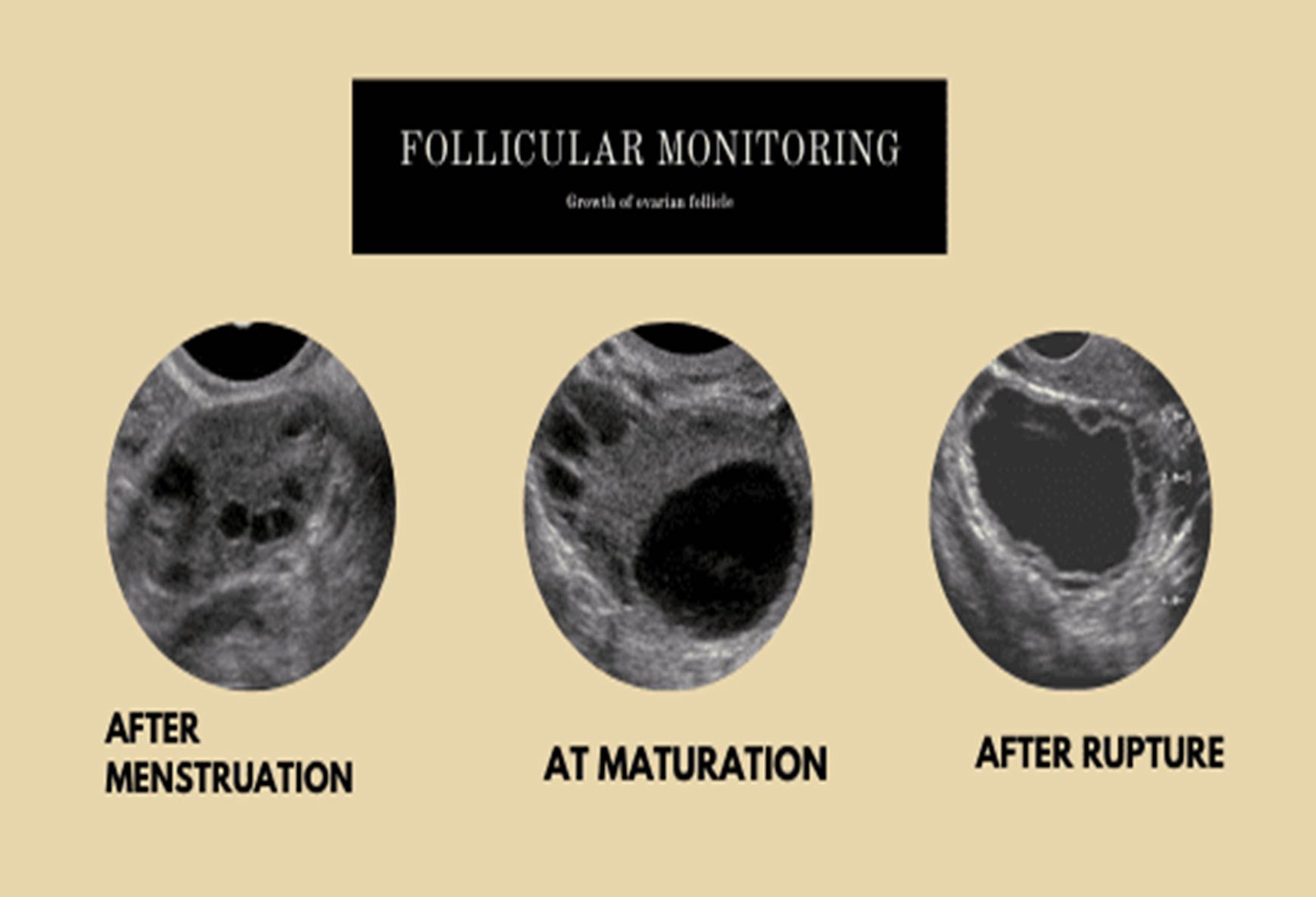
Follicular monitoring is a series of ultrasound scans done to track the growth and development of the egg (follicle) in a woman’s ovaries during her menstrual cycle.
This helps your fertility specialist determine:
- If you are ovulating
- When your egg is maturing
- The best time for intercourse, IUI, or egg retrieval (in IVF)
It is a key part of many fertility treatments, especially ovulation induction, IUI, and IVF.
Why Is Follicular Monitoring Important?
Every woman’s cycle is different, and timing is everything when trying to conceive. Follicular monitoring helps:
- Identify your fertile window
- Confirm whether ovulation is happening
- Prevent premature ovulation
- Guide the timing of trigger injections or IUI
- Adjust medications if needed
This monitoring greatly improves the chances of successful conception.
How Is It Done?
Follicular monitoring is done using transvaginal ultrasound, which gives a clear view of your ovaries and uterus.
Here’s What a Typical Cycle Might Look Like:
- Day 2–3:
- Baseline scan to check ovaries and uterus
- Blood tests may be done
- Day 9–11:
- First follicular scan to see how the follicles are developing
- Medication may be adjusted based on response
- Day 12–16:
- Follow-up scans every 1–2 days to track the size of the dominant follicle
- Once the follicle reaches about 18–22 mm, ovulation is near
- Ovulation Trigger:
- If needed, an hCG injection is given to trigger egg release
- Your doctor will advise on the best time for intercourse, IUI, or egg collection
Is Follicular Monitoring Painful?
No. The scan is done using a small ultrasound probe inserted into the vagina. It may feel slightly uncomfortable, but it’s quick and not painful.
The procedure is done in a private setting by experienced professionals.
Who Needs Follicular Monitoring?
Follicular monitoring is useful for:
- Women undergoing ovulation induction
- Couples trying to conceive through IUI or IVF
- Women with irregular cycles
- Monitoring natural ovulation in fertility work-ups
Benefits of Follicular Monitoring
- Helps pinpoint your most fertile days
- Increases the success rate of fertility treatments
- Allows timely medication adjustments
- Reduces the risk of multiple pregnancies
- Confirms if ovulation is actually occurring
What Happens After Monitoring?
Once ovulation is confirmed, your doctor will advise:
- The best time for natural intercourse or IUI
- Whether to proceed with egg retrieval (in IVF)
- Whether luteal phase support (like progesterone) is needed
If ovulation doesn’t happen, your treatment plan may be adjusted in the next cycle.
Let’s Track Your Cycle Together
Whether you’re just starting fertility treatment or preparing for IVF, follicular monitoring is a crucial tool in helping you conceive.